

Scaling an Enterprise Platform
Impact Strip
- Expanded access to high-fidelity procedural training for a distributed workforce
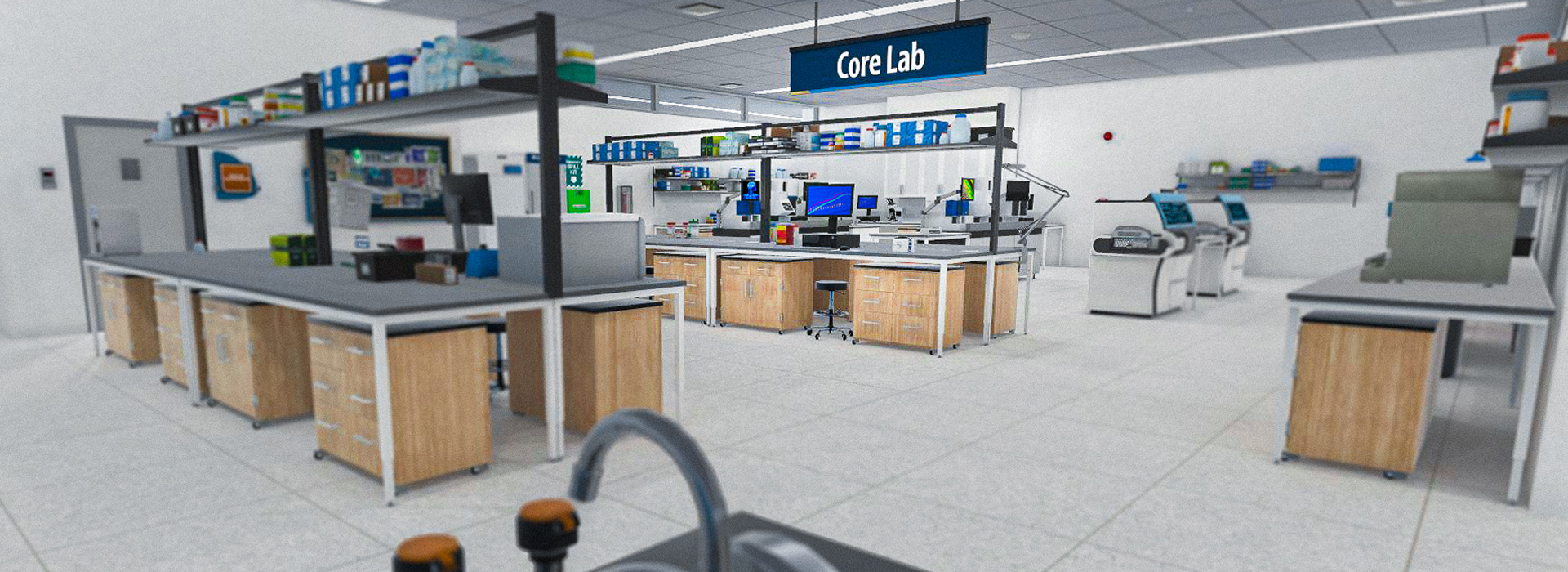
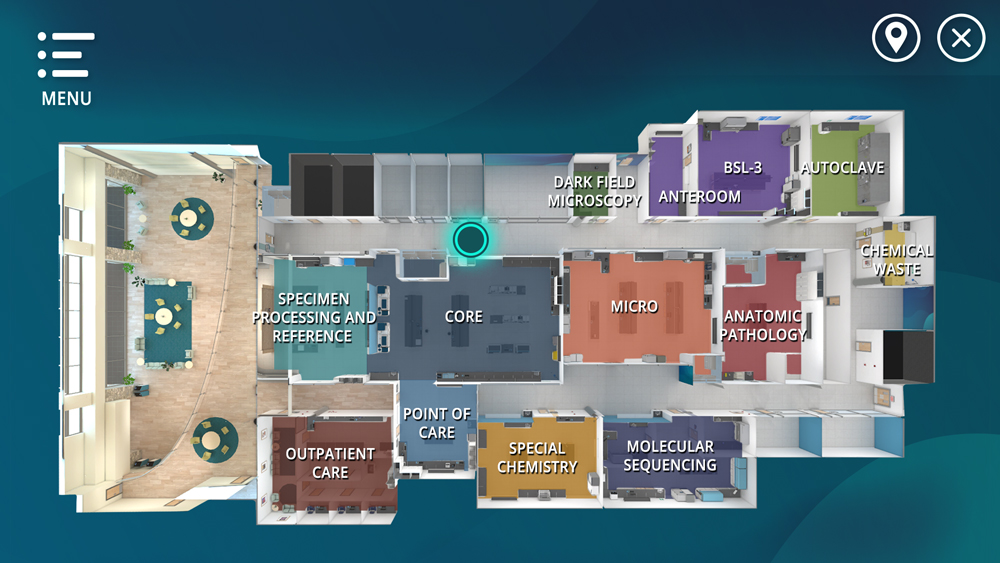
- Built a 50,000 sq. ft. persistent virtual learning environment
- Developed 13 specialized laboratories with 100+ interactive pieces of equipment
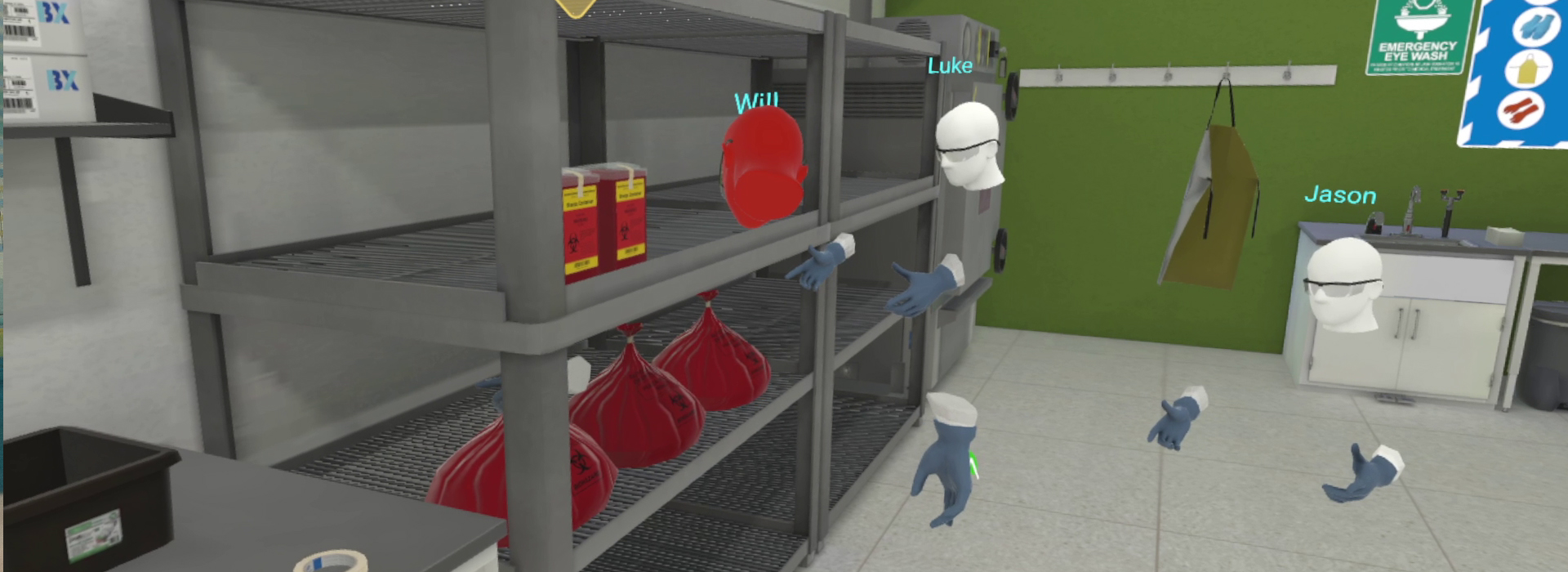
- Enabled collaborative learning and practice across geographic boundaries
- Established a quarterly release model supporting continuous expansion
Details below
Challenge
The COVID-19 pandemic exposed structural limitations in traditional laboratory training. Travel restrictions, workforce shortages, and global demand for rapid upskilling made in-person instruction difficult to scale.
CDC needed more than a temporary solution. It needed a durable, globally accessible platform capable of delivering high-fidelity procedural training while maintaining scientific accuracy and supporting long-term growth.
This wasn't about recreating classroom instruction in VR. It was about designing a new way for laboratorians to learn, practice, and collaborate regardless of location.
From Enterprise Strategy to Product Vision
When CDC funded a broader effort to unify its learning ecosystem under OneLab, our team was given an unusually open mandate: define how immersive learning could advance that organizational strategy. There was no product brief or prescribed solution.
I co-led the translation of that mandate into product vision, learning strategy, and roadmap—defining the platform's role within the OneLab ecosystem and establishing the release cadence and lifecycle governance required for long-term growth.
Building the Capability to Deliver
I recruited, built, and led a multidisciplinary team spanning Unity development, instructional design, motion design, and subject-matter expertise. We worked in weekly agile sprints while aligning with broader enterprise project management standards.
Together, we created more than 100 interactive learning experiences and laboratory assets across 13 specialized environments. I also designed the operating model and workflows required to sustain quarterly releases, expand content, and evolve the platform beyond its initial launch.
Driving Adoption
Building the platform was only half the challenge. The laboratory workforce didn't have headsets, wasn't familiar with VR as a training modality, and was distributed across the country. Convincing them this was worth their time — and then actually getting them set up — required a change management effort as deliberate as the product work itself.
We shipped headsets to labs across the country and traveled on-site to configure devices, connect networks, and answer questions in person. We ran standing office hours — calls with labs nationwide where I'd ask directly: what are you seeing, what isn't working, what do we need to fix? IT staff joined in real time and we troubleshot together.
What each site needed was a local champion—someone who would take ownership, build confidence, and keep the platform moving after we left. We couldn't be everywhere. So we built a model that didn't require us to be. Once a site was connected and had a local champion, the platform became self-sustaining. We learned quickly that successful adoption wasn't driven by technology alone. It depended on confidence, local ownership, and creating an environment where people felt comfortable learning in a completely new way. That model is what allowed a platform built by a small team to reach a globally distributed workforce.
Impact
OneLabVR turned CDC’s broader learning strategy into a globally accessible platform for distributed laboratory training. Laboratorians could learn, practice, and collaborate without the constraints of travel or physical classrooms, while the platform architecture, operating model, and local adoption strategy created a foundation for continuous expansion.
More than an immersive experience, OneLabVR demonstrated how an emerging creative technology could be aligned to an enterprise priority and built into a sustainable organizational platform.
My Role
As Associate Director, Creative Innovation, I co-led product vision and learning strategy while owning design direction, team development, and the operating model required to deliver, adopt, and scale the platform.
 PREV
PREV
