

OneLabVR – Global Immersive Training Platform
Key Points
- Co-owned product strategy and execution for a 50,000 sq. ft. immersive VR training platform designed for a global workforce.
- Defined platform vision, roadmap, release cadence, and lifecycle rhythms within an agile, weekly sprint environment.
- Architected a persistent, multiplayer infrastructure enabling quarterly content expansion and real-time global collaboration.
- Led design direction while recruiting and expanding a multidisciplinary team to build and sustain the product.
Details below
Challenge
The COVID-19 pandemic exposed structural limitations in traditional laboratory training. Travel restrictions, workforce shortages, and global demand for rapid upskilling revealed that in-person instruction alone could not scale to meet emerging public health needs.
CDC required more than a temporary workaround. It needed a durable, globally accessible training model capable of delivering high-fidelity, procedural education without geographic constraints. The solution had to balance scientific accuracy, technical performance, usability for first-time VR learners, and long-term expandability.
This was not simply a digital course initiative, it was the design of a new training infrastructure for a global workforce.
OneLabVR wasn’t just a product—it was a leap forward. We built a world where laboratorians can train, collaborate, and grow together, no matter where they are.
Strategy & Process
I served as co-owner of product strategy and execution, guiding OneLabVR from concept through launch and into sustained quarterly expansion. From inception, we structured the initiative as a platform — not a single training module — with defined vision, roadmap, release cadence, and long-term lifecycle governance.
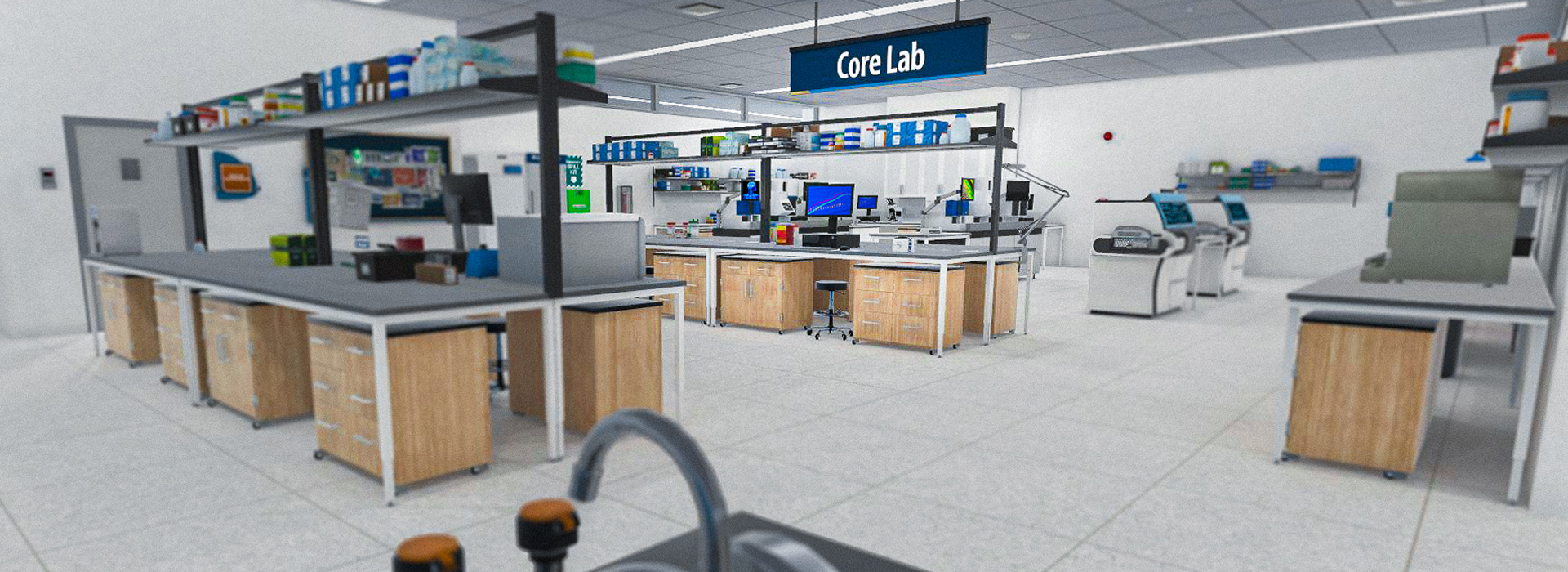
The architecture centered on a persistent 50,000-square-foot virtual campus composed of 13 specialized laboratories. Each lab was built within a modular framework, allowing new training content to be integrated without disrupting the core environment. This infrastructure supported both immediate launch needs and future procedural expansion.
We operated within an agile model, running weekly sprint cycles across Unity developers, instructional designers, SMEs, and leadership stakeholders. In parallel with platform design, I led recruitment and team expansion to ensure the product could scale sustainably beyond its initial release.
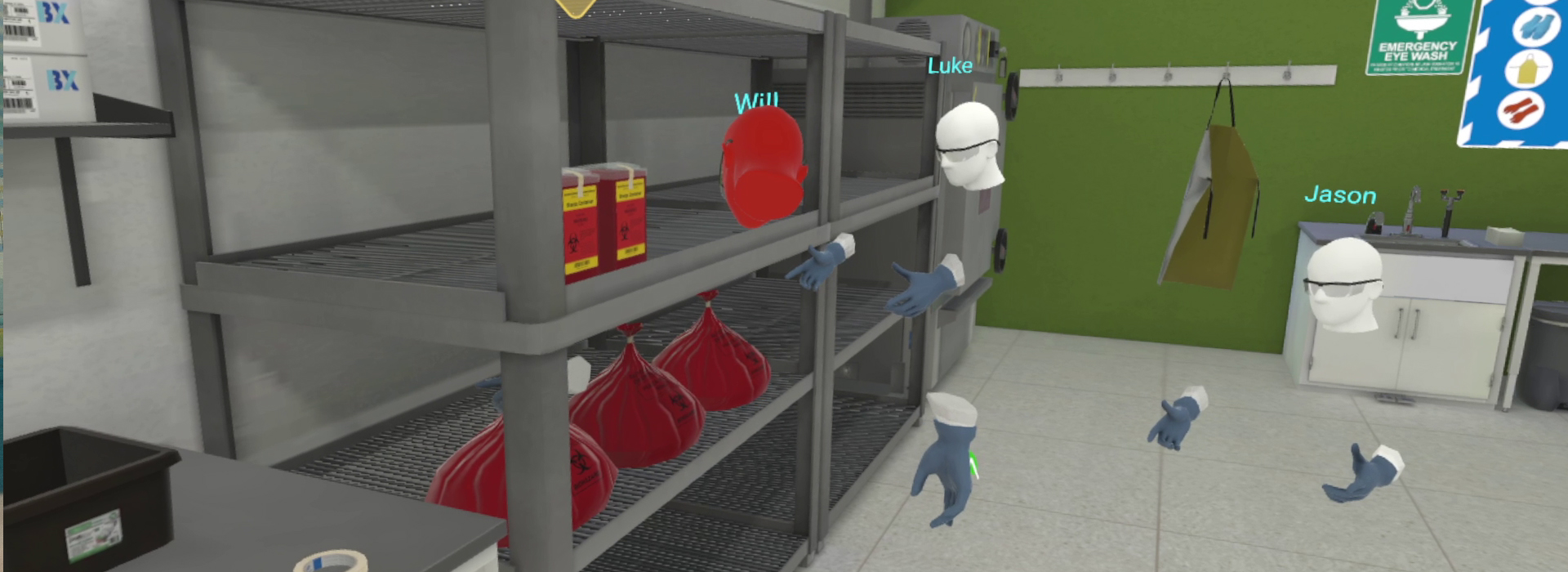
More than 100 pieces of interactive laboratory equipment were implemented with behavior-based realism, enabling high-fidelity procedural training. Multiplayer functionality was embedded at the architectural level, allowing geographically dispersed laboratorians to collaborate in real time.
The result was a living training ecosystem, designed for adaptability, global reach, and long-term growth.
Impact
OneLabVR launched as a persistent, globally accessible immersive training platform for the laboratory workforce. It established a scalable model for delivering high-fidelity procedural education without geographic constraints.
OneLabVR launched as a persistent, globally accessible immersive training platform for the laboratory workforce. It established a scalable model for delivering high-fidelity procedural education without geographic constraints.
Why I Included This
This project reflects large-scale product architecture, cross-functional leadership, and the design of a globally accessible training platform built for long-term growth.
 PREV
PREV
