

Unifying a Fragmented Enterprise Brand
Impact Strip
- Unified 12+ centers around a shared enterprise visual system
- Supported 10,000+ staff with scalable brand tools and guidance
- Achieved 95% brand adoption across the organization
- Reduced off-brand usage by 40%
- Drove rapid adoption across 20+ divisions within months
Details below
Challenge
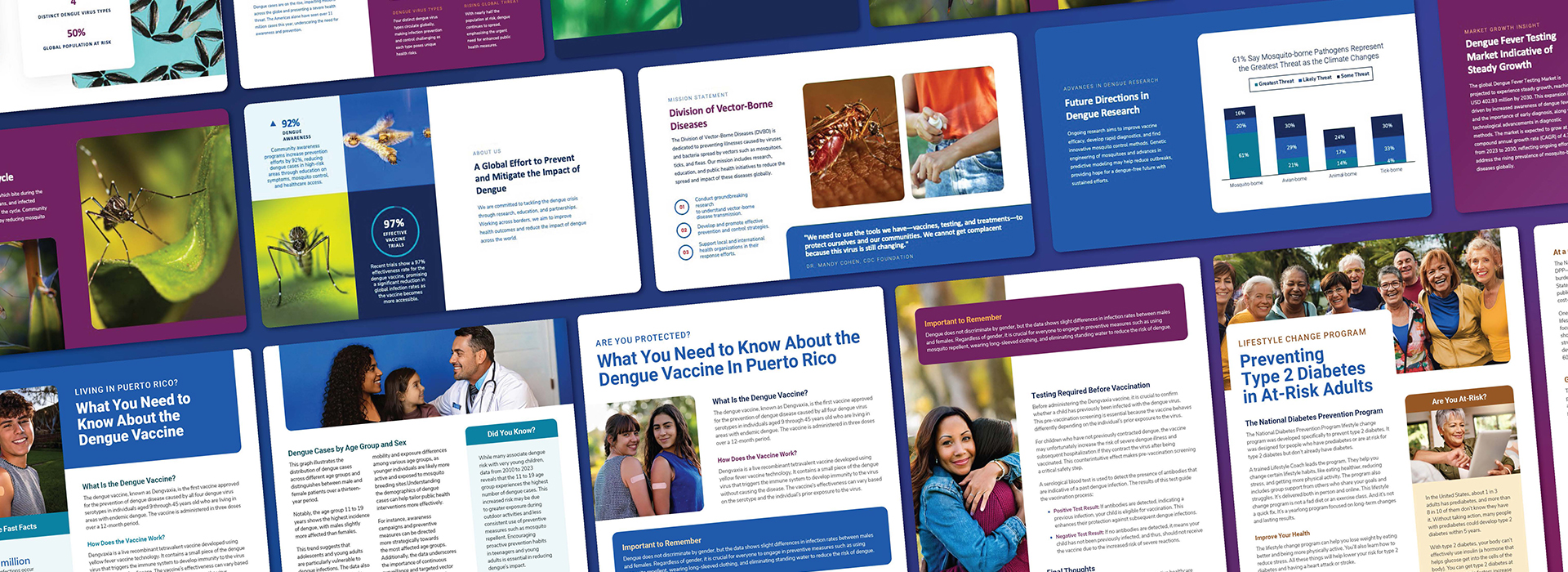
CDC was working to rebuild public trust. Sitting in meetings on the campaigns meant to do that, I noticed the visuals weren't carrying the same message. Centers were designing their own way, logos were used inconsistently, and templates were outdated. The agency had a strong name but no shared visual voice.
I pitched a fix to leadership: not a rebrand, but a visual identity system that built on CDC's established presence and gave every center the same foundation. It had to flex across 20+ divisions and stay simple enough that people would actually use it.
The Process: How We Got There
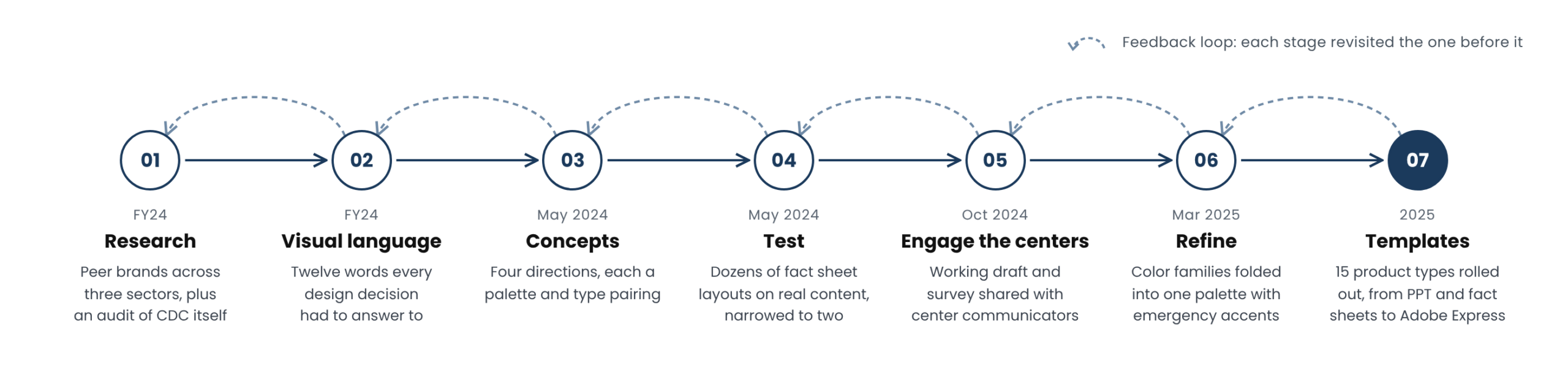
We worked through seven stages, each one looping back to sharpen the last. Two principles held throughout: decide with evidence, and design with the people who would use the system.
01 - Look Outward, Then Inward
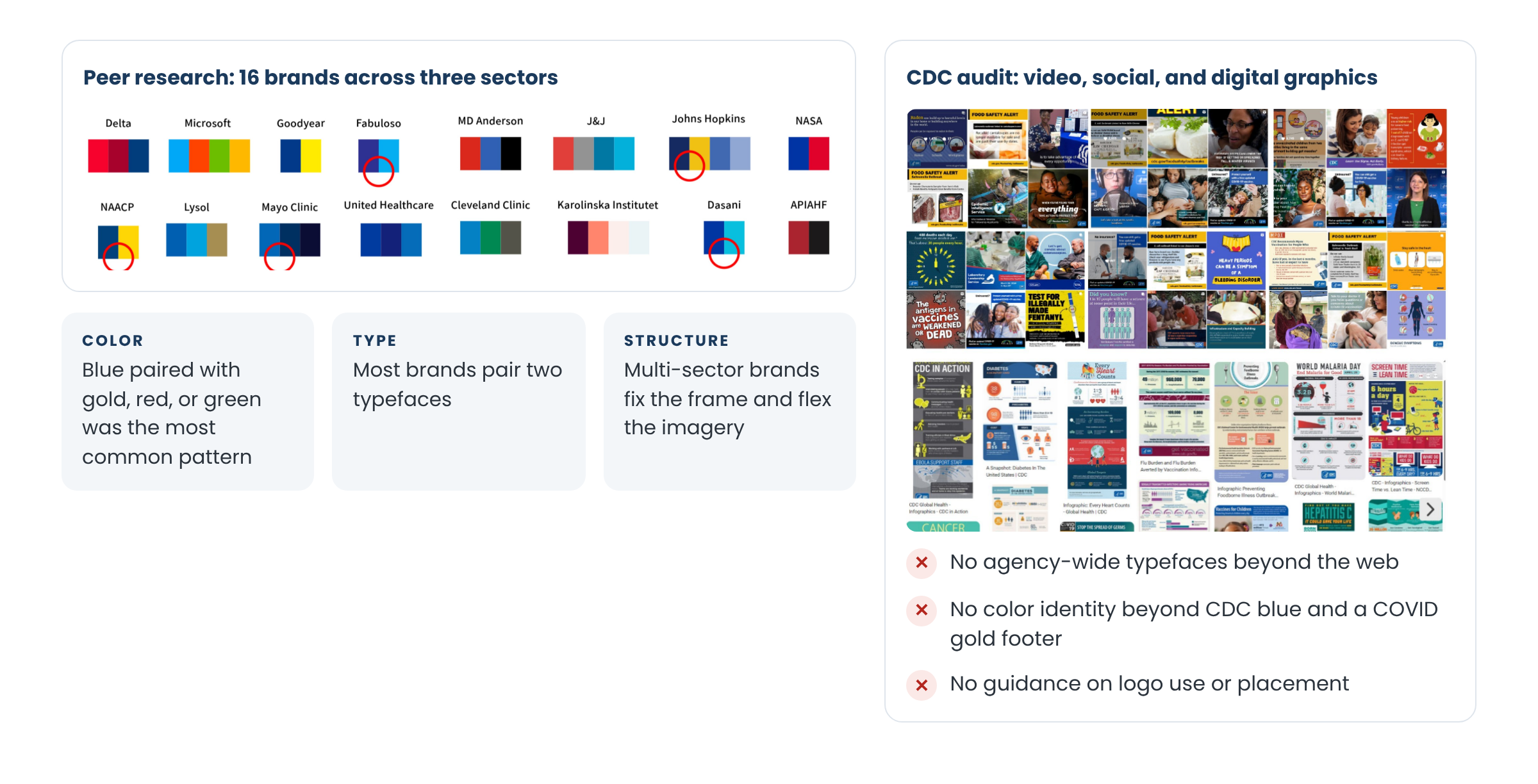
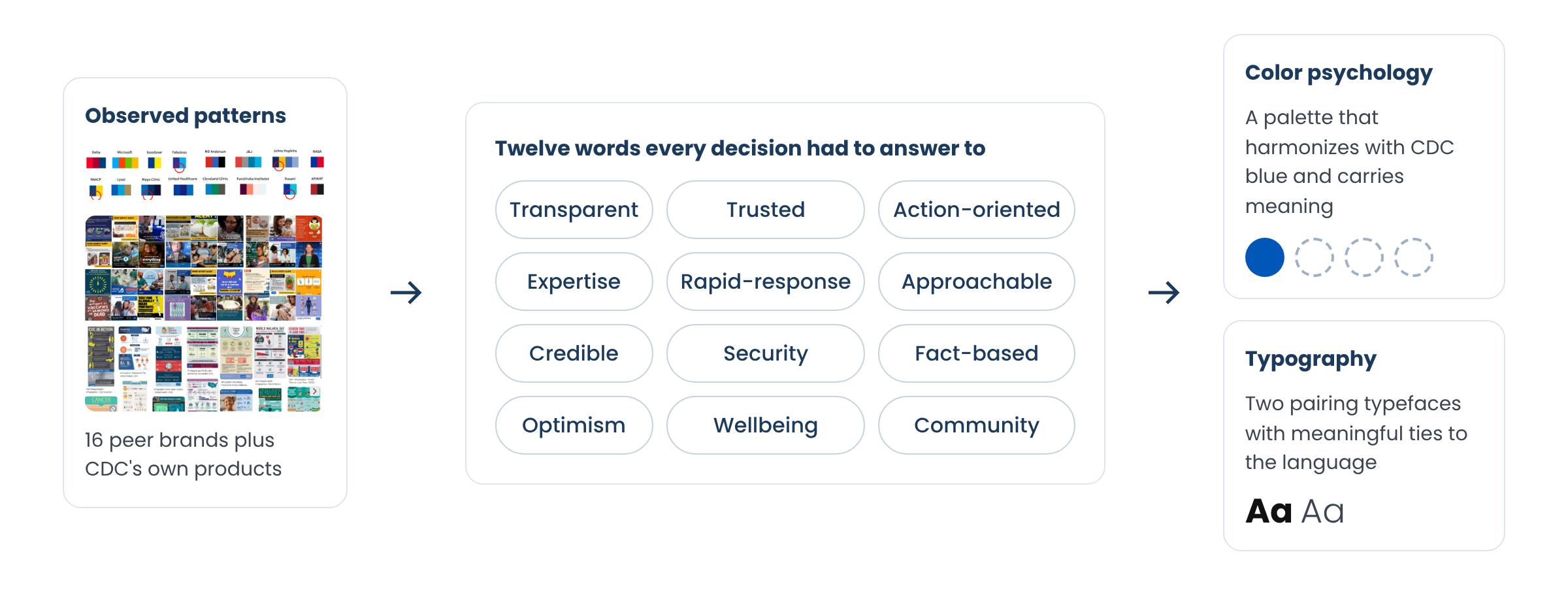
Before proposing anything, we needed evidence. We studied brands solving a similar problem: industry leaders, health and public service organizations, and multi-sector companies like Unilever and Southern Company that hold many sub-brands under one identity.
Then we audited CDC's own video, social, and digital graphics. Outside the website, there were no agency-wide typefaces, no color identity beyond CDC Blue and a COVID-era gold footer, and no guidance on logo placement.
02 - Define Who CDC Wants to Become Visually
Research showed what worked elsewhere. Before designing, we defined who CDC wants to be: twelve words, from transparent and trusted to rapid-response and community. Every color and type choice afterward had to answer to that list.
03 - Explore Four Directions
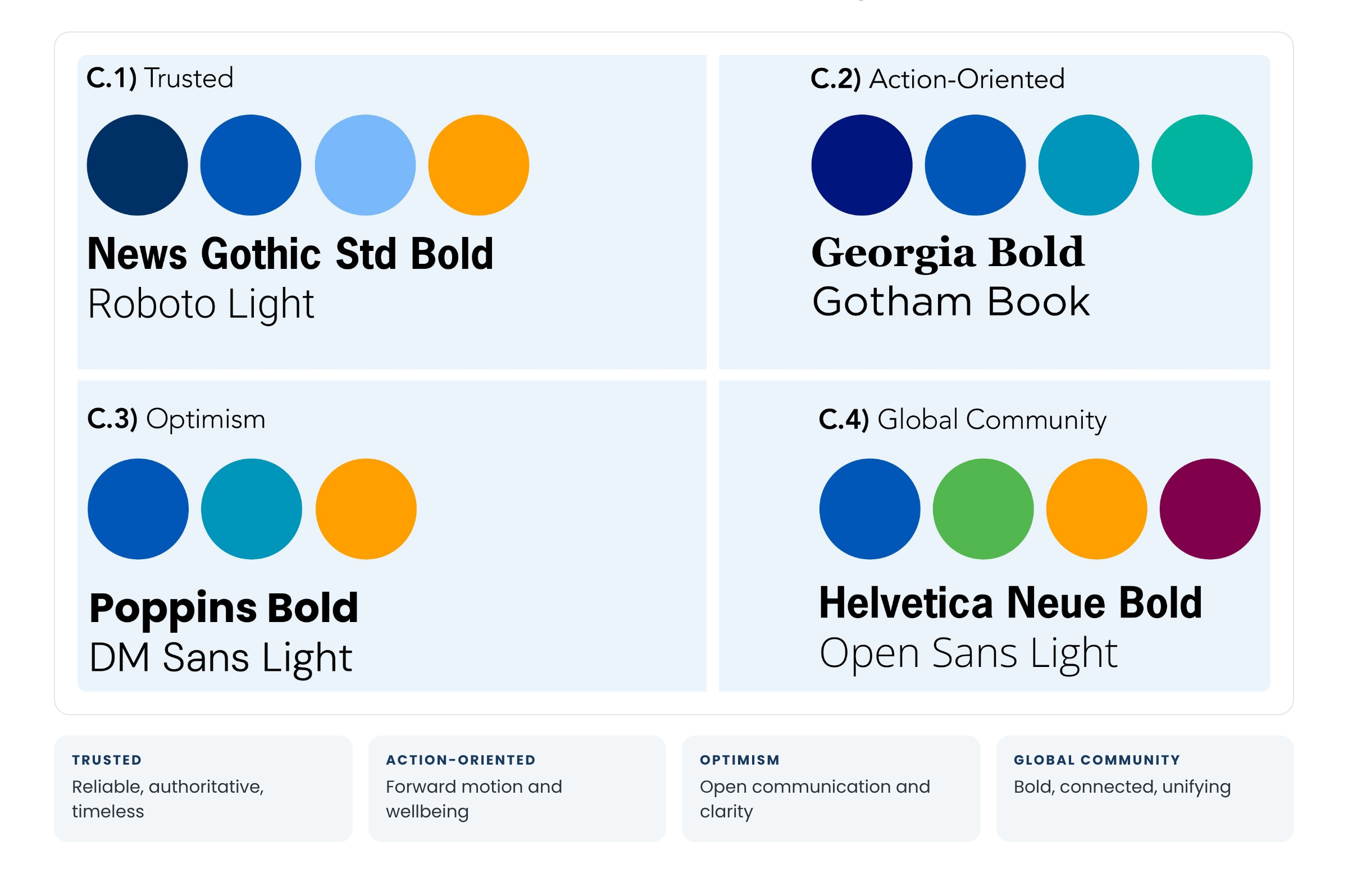
We translated the language into four concepts: Trusted, Action-Oriented, Optimism, and Global Community. Each paired a palette, grounded in color psychology and built around CDC Blue, with a two-typeface system.
04 - Test on Real Products, Not Swatches
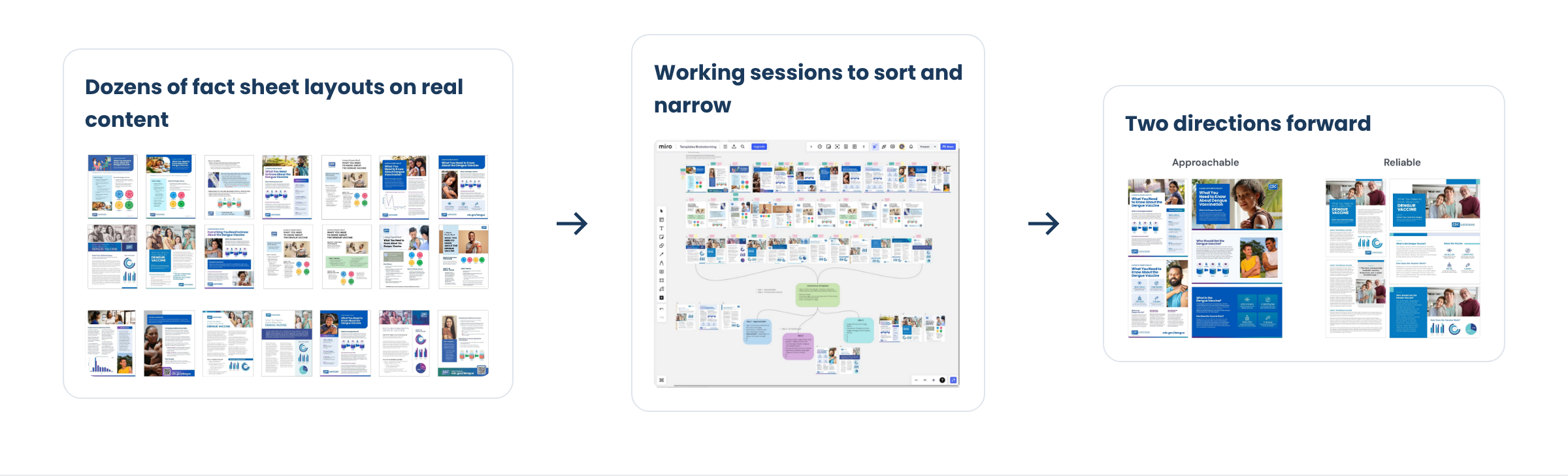
Swatches only tell you so much, so we tested on real products. Using an actual dengue vaccine fact sheet, we iterated dozens of layouts, varying imagery, text, and grid, then sorted them in working sessions down to two directions: Approachable and Reliable.
05 - Bring the Centers In Early
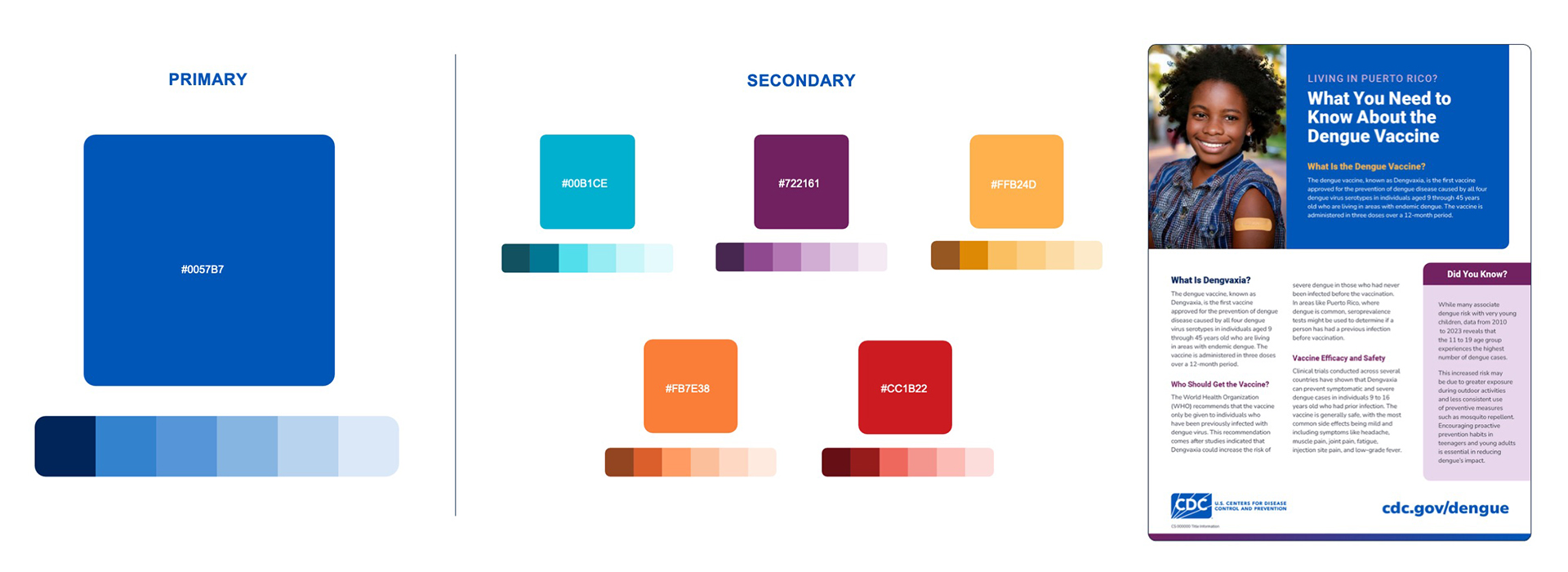
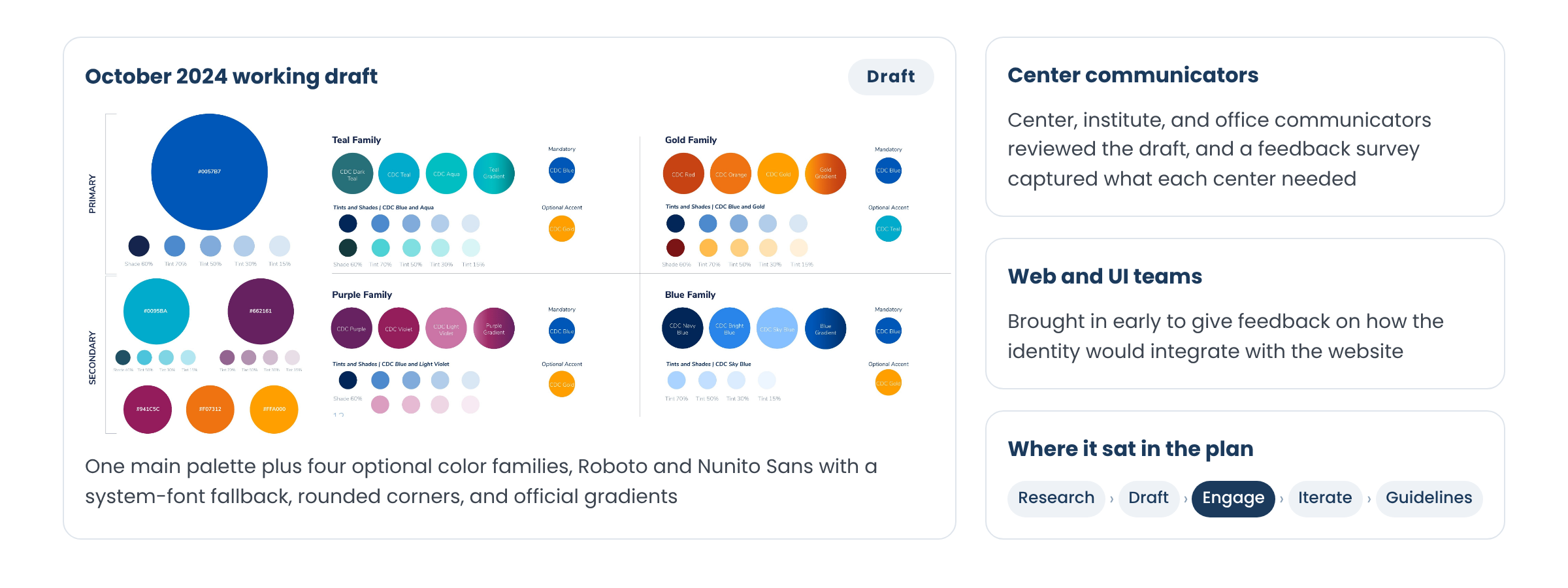
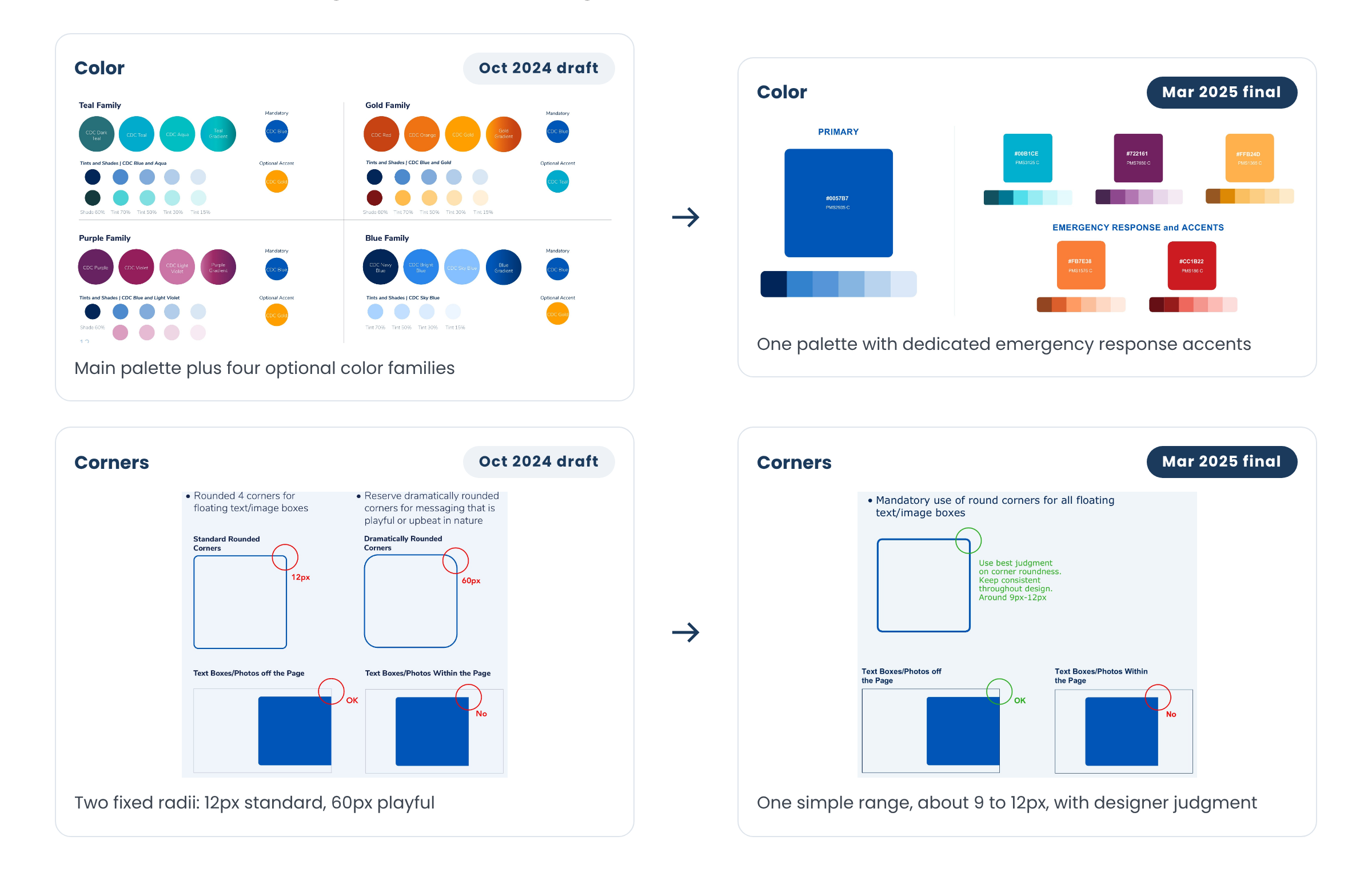
By October 2024 we had a working draft, and we put it in front of center, institute, and office communicators before anything was final. It included one main palette anchored in CDC Blue, four optional color families, a Roboto and Nunito Sans pairing with a system-font fallback, and two signature elements: rounded corners and official gradients.
A feedback survey captured what each center needed. In parallel, we brought CDC's web and UI teams in early for feedback on how the identity would integrate with the website, so the system was built for digital from the start rather than adapted to it later. The people who would use and carry the system helped shape it.
06 - Simplify Into a System People Will Use
The March 2025 final package was simpler than the draft. The four color families folded into one main palette: CDC Blue as the anchor, three secondary colors, and a dedicated orange and red pair for emergency response and alerts. Fixed corner values became a simple 9 to 12 px range.
Every color shipped with tints, shades, and Pantone values, so accessibility was built in rather than checked after the fact.
07 - Build It Into the Templates
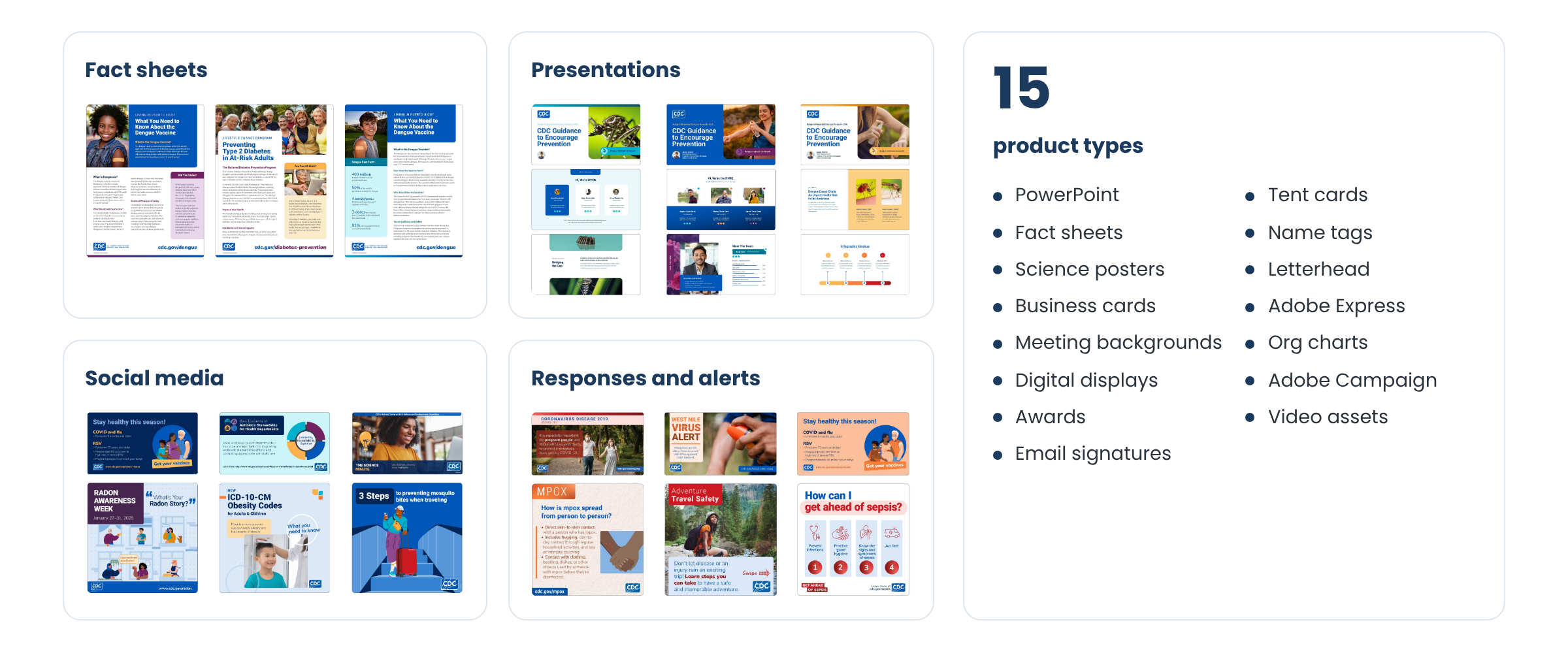
A system only works if it's in people's hands. We built it into 15 product types, from PowerPoint and fact sheets to scientific posters, letterhead, and Adobe Express.
Usage research shaped the templates: dozens of ready-made layouts, real content instead of placeholder text, and clear instructions for adapting each one.
Rollout - Making it Stick
Adoption was the real test. My team co-led a rebuild of the CDC Brand Hub, overhauling a digital asset library that had been patched together over years so 10,000+ staff could find the right assets. We added Adobe Express as a self-service layer, with dozens of templates already carrying the new identity, so communicators could produce on-brand work on their own.
The system covers all new external products, and its flexibility was expected to meet about 95% of paid campaign needs.
Impact
Within months, 20+ divisions had adopted the system. Adoption reached 95%, and off-brand usage dropped 40%.
Just as important, CDC's visuals now carried the same message as its words: one recognizable, trustworthy look, from a fact sheet to an outbreak alert.
My Role
As Sr. Manager, Design & Campaigns, I identified the gap, pitched the initiative, and led it from research through rollout. I set the creative direction, guided my team through research, concepts, and testing, partnered with center communicators, and put the governance and tools in place that kept the system consistent.
 PREV
PREV
